
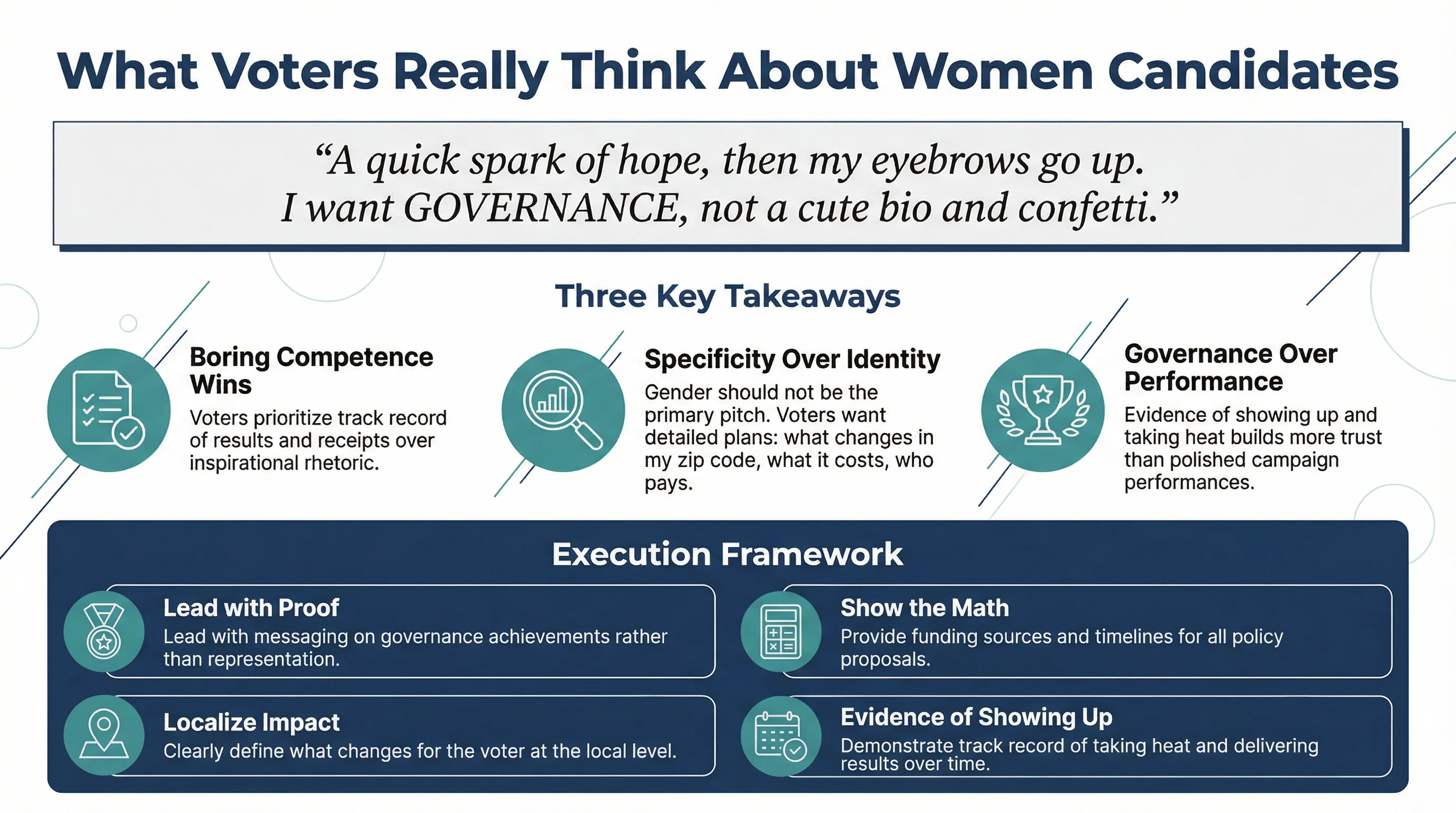
Hope Then Scrutiny: The Two-Phase Voter Response
When voters see a woman candidate announce her campaign, something interesting happens. There's an initial positive reaction - what one respondent called "a quick spark of hope." But that hope immediately triggers scrutiny.
"A quick spark of hope, then my eyebrows go up. I want GOVERNANCE, not a cute bio and confetti."
This two-phase response reveals both the opportunity and the challenge for women candidates in 2026.
What Wins Voter Support
Across six respondents, a consistent picture emerged of what makes voters support women candidates:
Boring competence with receipts - track record matters
Specific plans: what changes in my zip code, what it costs, who pays
Evidence of showing up and taking heat over time
Speaking like a grown-up, not performing
The phrase "boring competence" appeared multiple times. Voters don't want inspiration - they want proof of capability.
What Loses Voter Trust
The research also revealed clear turn-offs:
Gender as the primary campaign pitch
Thin plans or fuzzy numbers
Feeling pressured to vote for identity instead of results
Performance over substance
One respondent put it bluntly: "I'm not giving my vote just because we share gender. If the plan is thin or the numbers are fuzzy, I'm out."
The Specificity Imperative
The most actionable finding: specificity builds trust where identity claims don't. Voters want to hear:
What specifically changes if this candidate wins
What it costs and who pays for it
When they'll see results
What track record proves she can deliver
Implications for Campaigns
The good news for organizations supporting women candidates: the baseline voter reaction is positive. The initial spark of hope is real. The challenge is maintaining that trust through specificity rather than relying on representation as a selling point.
Women candidates who lead with governance proof over gender identity may find voters more receptive than campaigns often assume. The data suggests voters want women to win - but they want to vote for competence, not symbolism.