
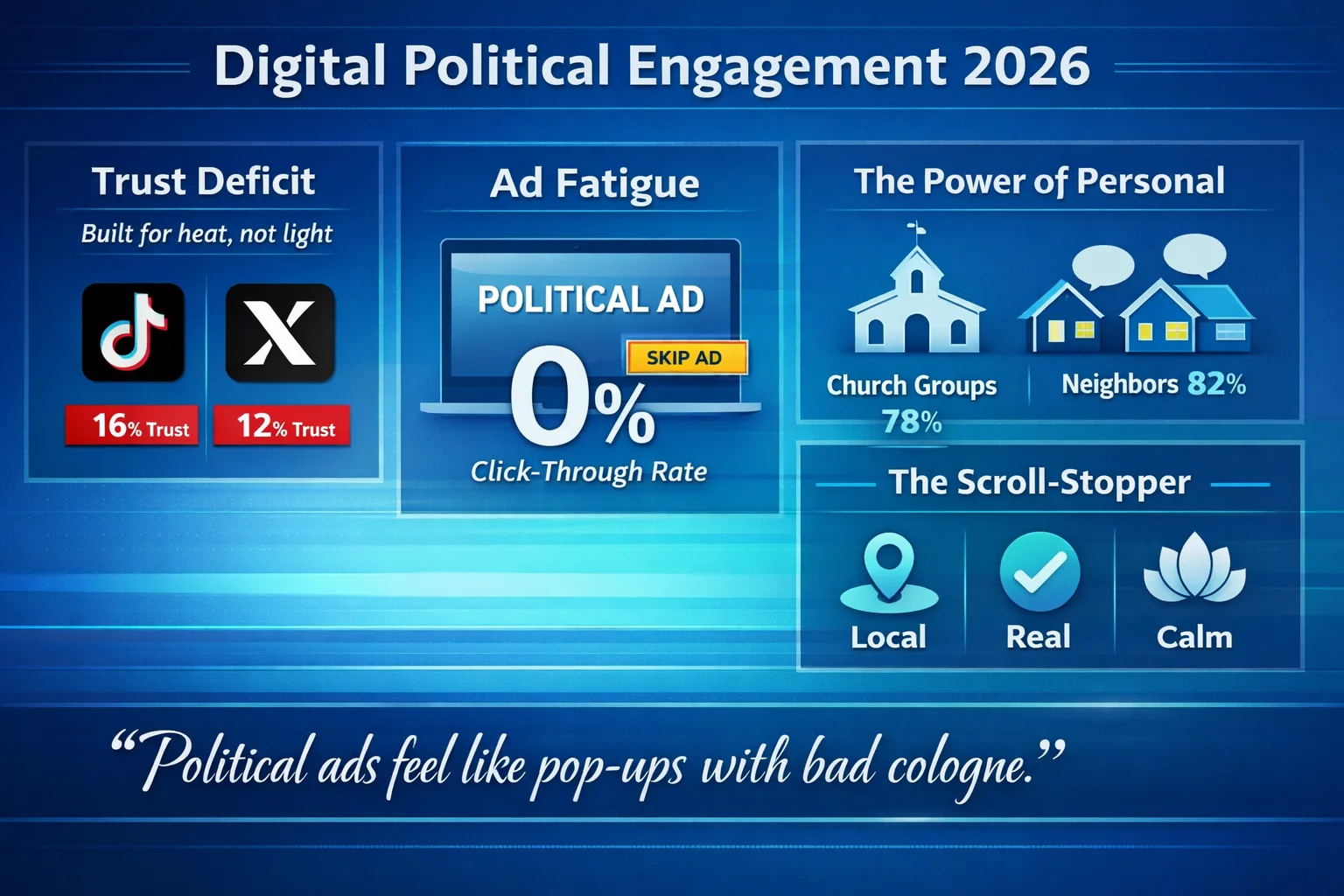
'Political ads feel like pop-ups with bad cologne - pushy and probably tracking me.'
We asked 6 American voters how they actually engage with political content online. The results should make every digital campaign strategist rethink their approach.
The Participants
Six US adults aged 25-55, from Dallas to rural New Jersey to Florida. Mix of workers, professionals, and community members. Varying levels of social media usage.
The Platforms They Trust Least
TikTok: 'Built for heat, not light'
X (Twitter): 'Too many hot takes, bots, and out-of-context screenshots'
Facebook political posts: 'Echo chambers and rumor mills'
Partisan cable news clips: 'Performative and clipped to fit a narrative'
I don't trust the algorithm or the data trail. Short-form video apps are all clips, no sourcing, built for outrage.
Key Finding #1: Nobody Clicks Political Ads
This was the most consistent finding. Political ads are treated like spam.
I don't click political ads. Too many trackers, too much noise, zero clarity.
But here's what's interesting: these same voters DO take political action online. Just not from ads.
Key Finding #2: Personal Vouching Works
When voters engage politically online, it's through trusted personal connections:
Church group posts with a pastor's endorsement
Neighborhood Facebook groups for local issues
A friend sharing something specific and concrete
Community pages they already trust for non-political content
I signed up for a pantry shift after a legit post from our pastor. That's different from a random ad.
Key Finding #3: What Stops the Scroll
The answer was consistent: 'Local, real, and calm.'
A neighbor breaking down property taxes with an actual bill on screen
A town hall clip where someone answers a tough question directly
Bilingual content with captions
Short posts with clear links to more information
What This Means for Digital Campaigns
Invest in community relationships, not ad impressions
Local content outperforms national messaging
Calm and specific beats dramatic and slick
Work through trusted intermediaries
Make content accessible (captions, translations)